Statements and reports
A party's statement of account, the aging of what is owed, credit limits, finance reports and the accountant's files.
From Invoices: Statements, Receivables and Reports. Anyone who can see invoices can read them; the accountant's files and account codes are for owners and finance.
Statement of account
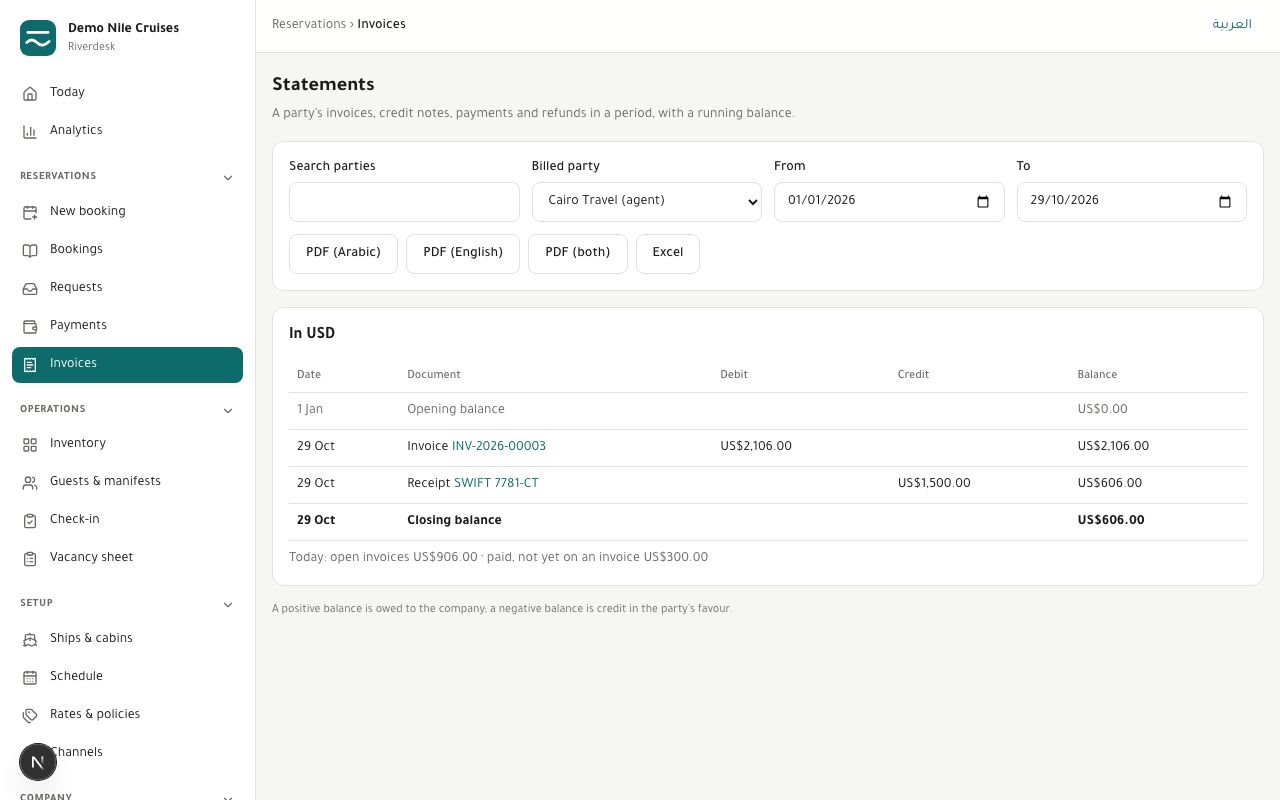
Choose the party and the period. For each currency: the opening balance, every invoice, credit note, payment and refund with a running balance, and the closing balance. A positive balance is owed to the company; a negative one is credit in the party's favour. Beneath it: today's open invoices and the money paid but not yet on an invoice.
Send it as a PDF in Arabic, English or both, or download Excel.
Receivables (aging)
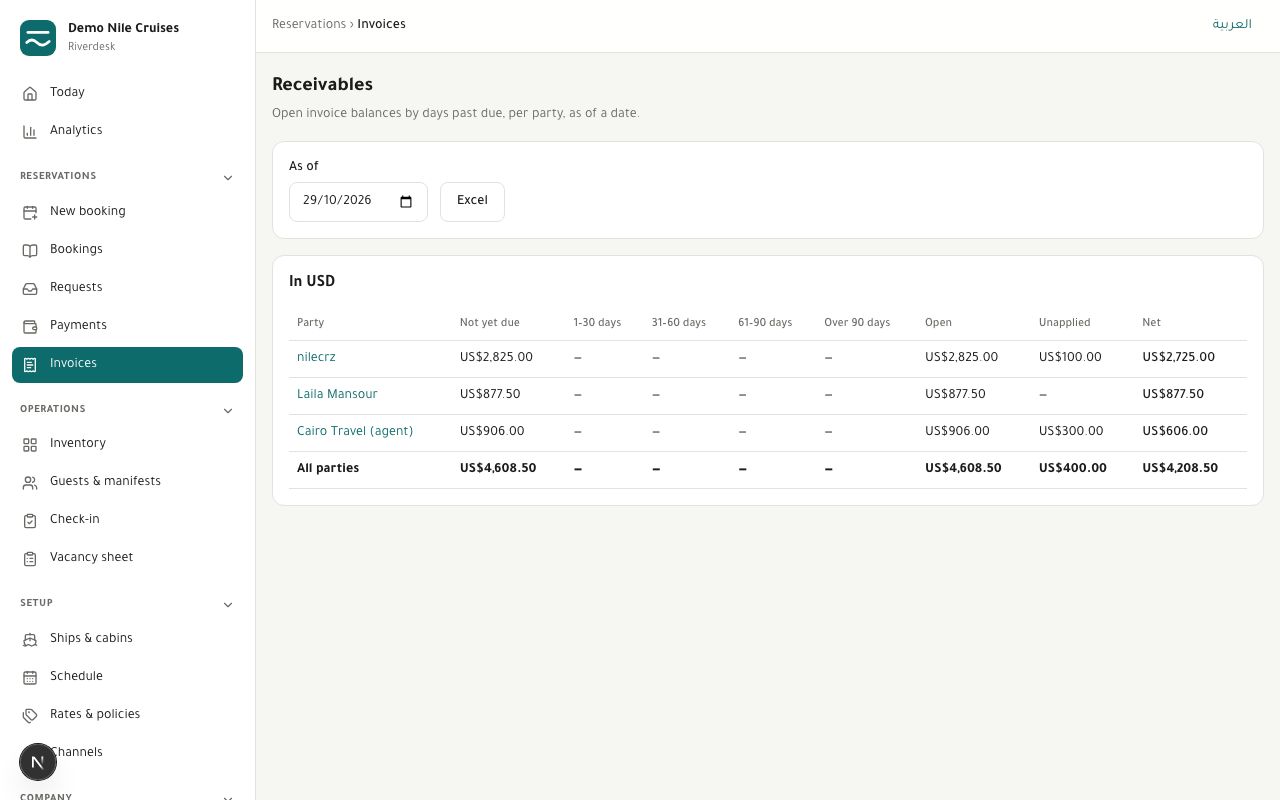
What each party owes on open invoices, by how late it is — not yet due, 1–30, 31–60, 61–90 and over 90 days past the due date — as of any date, with the money it has paid that is not yet on an invoice and the net. Choose a party to open its statement. Excel for the accountant.
Credit limits
An agency's credit used is its confirmed bookings not yet invoiced, plus its open invoices, less money it has paid that is not on an invoice yet. On each credit contract (Channels), choose what happens to a booking over the limit:
- Needs approval (the default): it becomes a request for you to accept.
- Warn only: it is confirmed, and the booking page shows what the agency now owes against its limit.
Today
Today also lists invoices overdue or due within 3 days, money received but not yet on an invoice, and bookings that sailed in the last 7 days without an invoice.
Reports
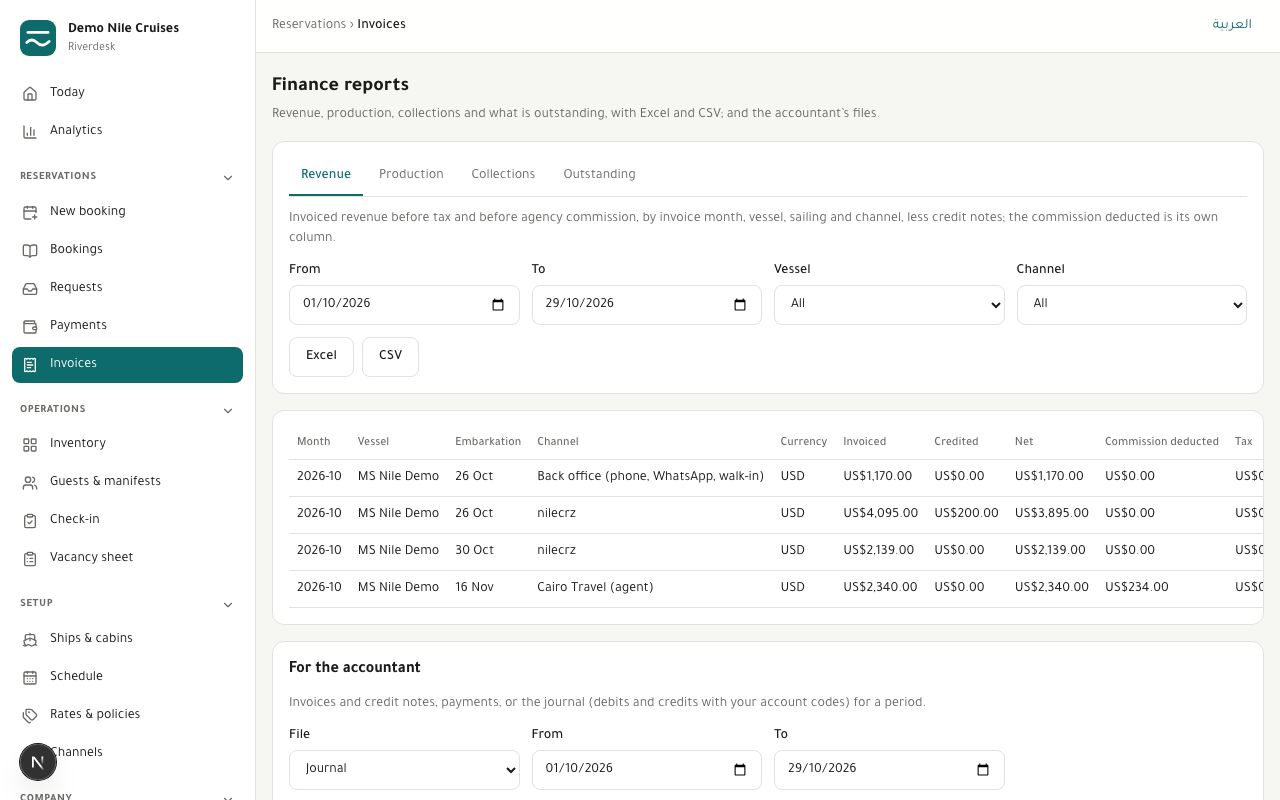
- Revenue: invoiced before tax and before agency commission, by invoice month, vessel, sailing and channel, less credit notes; commission and tax in their own columns. Extras on board (closed folios) count with their booking's vessel, sailing and channel, and the Extras on board column shows how much of the revenue they are.
- Production: bookings by embarkation date — booked value, invoiced, not yet invoiced.
- Collections: money received and paid back by month and method.
- Outstanding: open and overdue balances and unapplied money per party.
Each has Excel and CSV. Amounts stay in their own currency.
For the accountant
Under the reports (owners and finance): invoices and credit notes, payments, or the journal for a period, as Excel or CSV. The journal lists debits and credits with your account codes and the EGP amount at each invoice's rate. If a code is missing it says which; set them in Finance settings → Account codes.
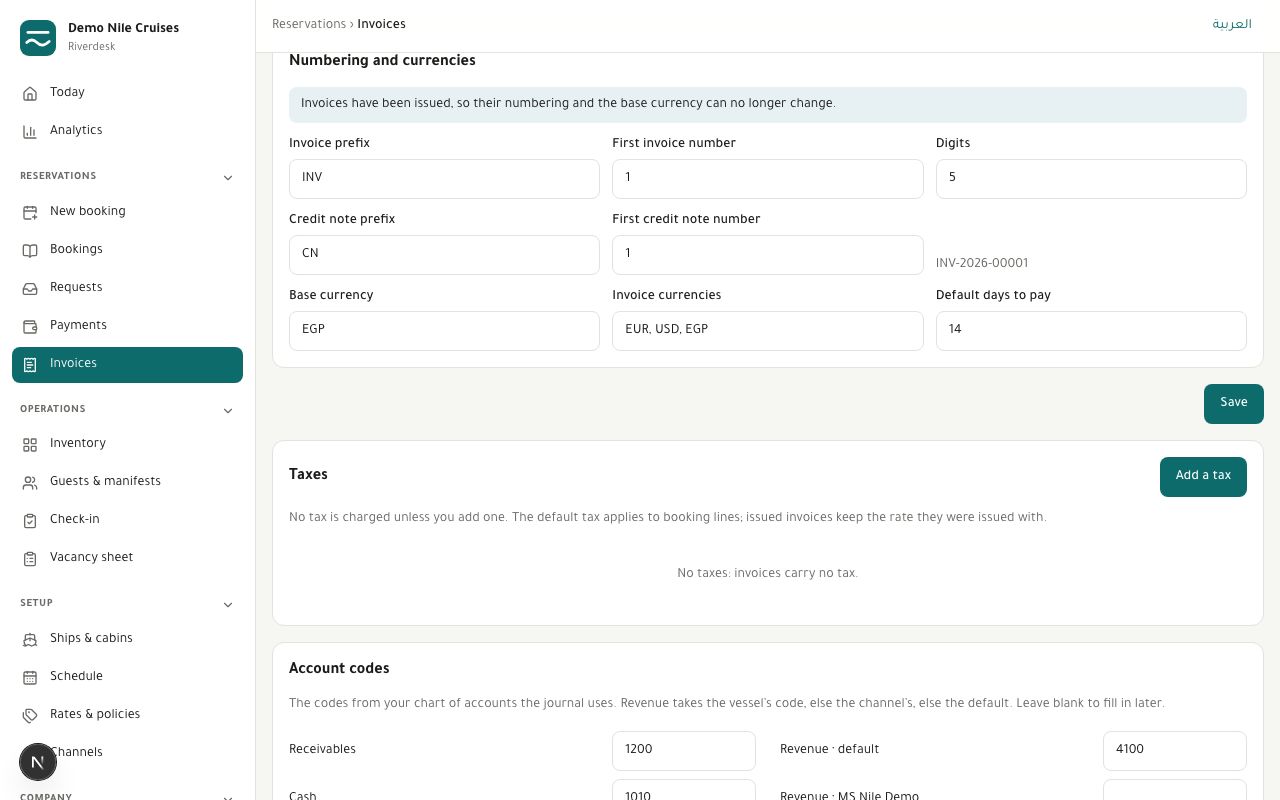
Revenue takes the vessel's code, else the agency's, else the default. Extras on board take the Extras on board code of their vessel, else the company's extras code, else the vessel's revenue code, else the default revenue code.